
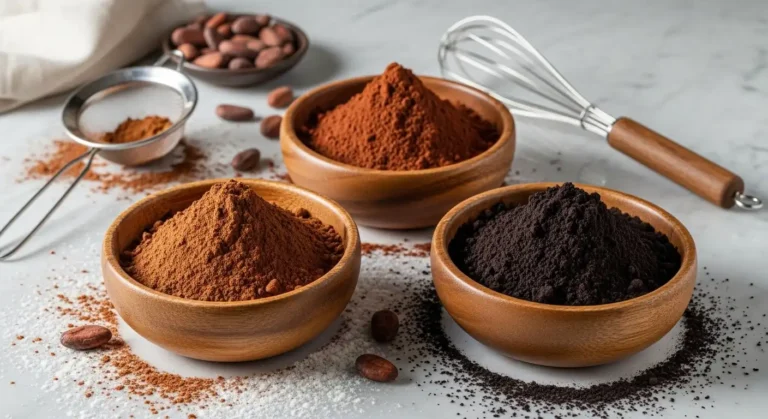
There was a time when I thought eating healthy meant giving up chocolate completely. Every time I tried to follow a clean diet, my biggest struggle was always the same, cravings. Especially for chocolate. That’s when I discovered baking cocoa powder, and everything changed.
At first, I was just looking for a healthier alternative, something natural and simple. But once I started using baking cocoa powder in my daily routine, adding it to homemade desserts, I realized I could enjoy chocolate without ruining my healthy lifestyle.
What makes baking cocoa powder so powerful is its purity. It’s rich, natural, and free from unnecessary sugars and additives, making it perfect for clean eating and healthy recipes. For anyone trying to lose weight, reduce sugar, or simply eat better, it’s a game changer.
Why I Love Baking Cocoa Powder
I love this recipe because it gives me the rich chocolate taste I crave, but in a way that actually supports my body. Using baking cocoa powder makes it feel like a treat, but also something I can enjoy without guilt.
- Rich chocolate taste – I get the deep, satisfying flavor without using unhealthy ingredients.
- Made with baking cocoa powder – Pure, simple, and free from unnecessary additives.
- Magnesium – Helps reduce fatigue, supports muscles, and keeps my energy stable.
- Iron – Supports healthy blood and helps improve overall energy levels.
- Antioxidants (flavonoids) – Protect the body from stress and support heart health.
- Potassium – Helps maintain healthy blood pressure and supports heart function.
- Natural fiber – Aids digestion and keeps me feeling full longer.
- Low in sugar (when used right) – Perfect for clean eating and balanced desserts.
- Guilt-free dessert – I can enjoy chocolate while still taking care of my body.
For me, this recipe is more than just dessert—it’s a way to enjoy chocolate while giving my body something good at the same time. It’s simple, natural, and honestly, it just makes me feel better.
Table of Contents
What I Wish I Knew About Baking Cocoa Powder
Defining 100% Unsweetened Cocoa
Think of this as the pure essence of chocolate, the way my grandma, who absolutely loves chocolate, used to describe it. She would start with fermented cocoa beans, roasting them until the whole kitchen filled with that rich chocolate aroma. Then she’d grind them until they turned into a thick liquid called chocolate liquor. After that, most of the fat (the cocoa butter) would be pressed out, leaving behind a solid “press cake.”
My grandma would grind that cake into a very fine, unsweetened cocoa powder—the same kind we use in baking. Since it has no added sugar or milk, the flavor is strong and naturally bitter, but it’s the real, pure taste of chocolate.
Every time I tasted it, it felt like the best and purest chocolate I had ever had, because my grandma made it at home with love.
Why Baking Cocoa Powder Is Not the Same as Hot Cocoa Mix
One time while baking a chocolate cake, I almost made a big mistake. I was about to grab a packet of hot cocoa mix like Swiss Miss instead of real baking cocoa powder. At first, it seemed like the same thing—both are chocolate powder, right?
But hot cocoa mix is actually made for drinking. It contains sugar, powdered milk, and other additives. If I had used it in the recipe, the sugar balance would have been completely off, and the cake probably would have turned out flat, sticky, and overly sweet.
That moment taught me something important: baking cocoa powder is a pure ingredient, while hot cocoa mix is a finished drink mix. And in baking, that difference really matters.
The Nutritional Profile of Cocoa
Believe it or not, your chocolate cravings might actually be your body asking for a boost. Pure cocoa is a powerhouse of polyphenols and antioxidants. It’s famous for being rich in magnesium—which is great for muscle function—and it even packs a decent amount of dietary fiber. While we usually mix it with butter and sugar (guilty as charged!), the base ingredient is surprisingly healthy. It’s also naturally vegan and gluten-free, making it a versatile MVP in any pantry.
The “Natural” Standard
In the United States, if a tin just says “Cocoa” without any fancy descriptors, it’s usually Natural Cocoa. Brands like Hershey’s have made this the gold standard for American childhood treats. It’s light in color, tastes a bit “sharp” or fruity, and is quite acidic. This acidity isn’t just about flavor, though; it’s a functional part of the recipe. Most classic American recipes were developed specifically to work with this acidic profile to help the dough react and grow.
How I Learned to Stop Confusing Natural and Dutch-Processed Cocoa (It’s Chemistry!)
Choosing between these two isn’t just about the brand; it’s about the pH levels. Think of it like a science experiment where the wrong choice leads to a kitchen fail.
The Acidic Nature of Natural Cocoa
Natural cocoa is exactly what it sounds like: pure, roasted cacao solids that haven’t been messed with. Because it is minimally processed, it stays quite acidic, usually sitting at a pH level between 5.3 and 5.8. This acidity gives it a sharp, almost fruity or citrus-like profile. If you’re making a classic American brownie, this “zing” is what provides that iconic, old-school chocolate punch.
What is Dutch-Process Cocoa?
Back in the 1800s, a Dutch chemist named Coenraad van Houten decided to wash cocoa beans in an alkaline solution (usually potassium carbonate). This process, known as “Dutching,” neutralizes the natural acids present in the bean. The result is a baking cocoa powder that is darker, mellower, and much easier to dissolve in liquids. It’s why European chocolates often taste “smoother” and look more like a rich, dark truffle than a light milk chocolate bar.
Visual and Flavor Comparison
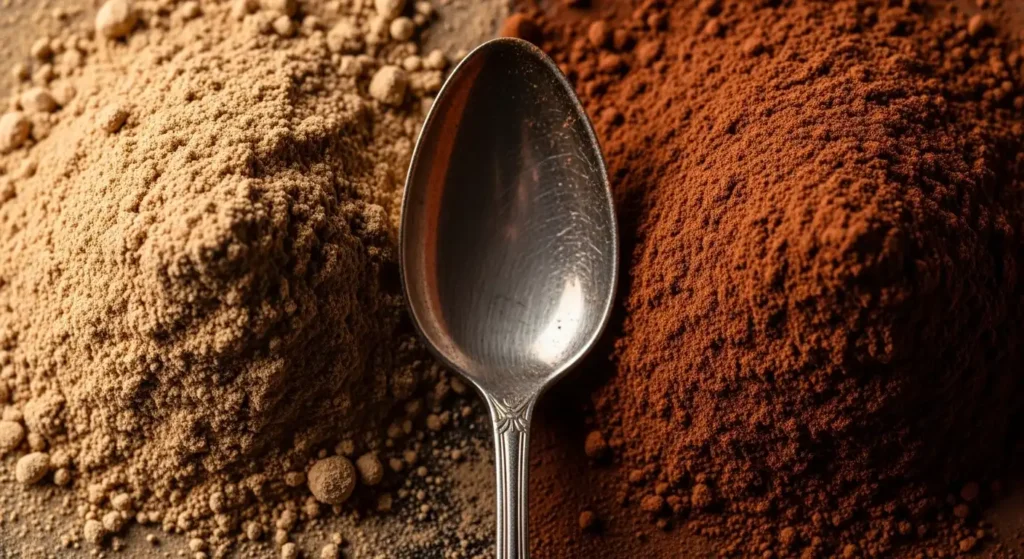
When you put them side-by-side, the difference is startling. Natural cocoa is a pale, dusty tan, whereas Dutch-process is a deep, reddish-brown. In terms of flavor, the Dutch version of baking cocoa powder loses those sharp acidic notes, replacing them with a heavy, earthy cocoa base. Because the bitterness is dialed down, it’s often the go-to for ganache or frosting where you want a “clean” chocolate taste.
Comparison Table: Natural vs. Dutch-Process
| Feature | Natural Cocoa Powder | Dutch-Processed Cocoa |
| pH Level | Acidic (5.3 – 5.8) | Neutral to Alkaline (7.0 – 8.0) |
| Appearance | Light tan / Brown | Deep reddish-brown to black |
| Flavor Profile | Sharp, citrus, fruity | Mellow, earthy, woodsy |
| Common Pairings | Baking soda | Baking powder |
| Solubility | Harder to mix in liquids | Highly soluble |
My Aha Moment: Mastering Leavening Agents Through Baking Cocoa Powder
This is where things get tricky. If you swap these cocoas without adjusting your leavening, your cake might stay as flat as a pancake.
Understanding the Baking Soda Reaction
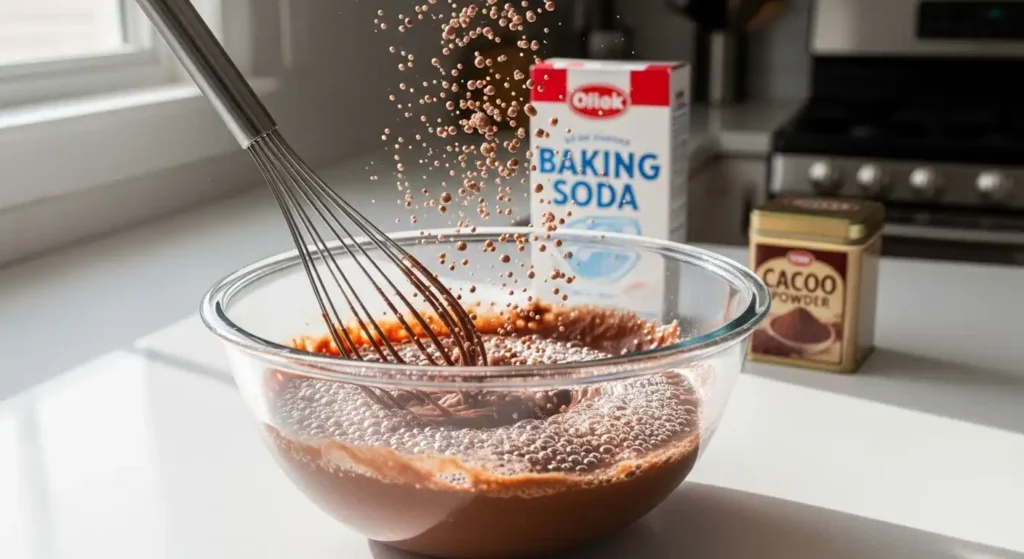
I remember when I first started learning how baking soda works in recipes. While baking, I realized that a reaction similar to those school volcano experiments was happening in my oven. Baking soda is a base and needs an acid to create bubbles that help cakes rise. When I used natural baking cocoa powder, its acidity activated the baking soda and created carbon dioxide that lifted the cake. But when I used the wrong type of baking cocoa powder, the cake turned dense and didn’t rise properly. That’s when I understood how important choosing the right cocoa powder really is.
Baking Powder and Dutch-Process
Since Dutch-process cocoa is neutral, it doesn’t have the “juice” to activate baking soda. Consequently, recipes using Dutch cocoa almost always rely on baking powder. Why? Because baking powder contains its own built-in acid. It’s a self-contained rising kit. If a recipe calls for Dutch-process but asks for baking soda, there’s usually another acid present, like buttermilk or vinegar, to do the heavy lifting.
The “Red” in Red Velvet
Did you know the original Red Velvet cake didn’t use food coloring? It was all about chemistry! When the acids in natural cocoa react with buttermilk and vinegar, it brings out a reddish-brown tint in the cacao solids. Modern versions use dye for that neon look, but a true connoisseur knows that the original “red” was just a beautiful side effect of using the right baking cocoa powder.
Troubleshooting Flat Cakes
If your cake comes out of the oven looking like a sad crater, check your cocoa. Did you use Dutch-process in a recipe meant for natural? If so, the lack of acid meant no bubbles were formed. Similarly, using natural cocoa in a recipe that only calls for baking powder can sometimes make the cake rise too fast and then collapse. Always match your cocoa to the leavener!
Fat Content and Texture: Why Your Choice of Cocoa Matters
Many home bakers assume all cocoa is created equal, but the fat content can vary wildly. This hidden number dictates whether your brownies are “fudgy” or “bready.”
The 10% vs. 22% Fat Rule
Most grocery store cocoas are “low-fat,” containing only about 10% to 12% cocoa butter. While this works for everyday cookies, premium brands often offer “high-fat” versions with 22% to 24% fat. Because fat provides moisture retention, using a high-fat baking cocoa powder results in a more velvety mouthfeel. If your cakes often turn out dry or crumbly, switching to a higher fat percentage might be the silver bullet you need.
How to Read a Nutrition Label
Since most tins don’t scream “High Fat” on the front, you have to do a little math. Look at the nutrition panel for the “Total Fat” per serving. If a 5g serving has 0.5g of fat, you’re looking at a standard 10% cocoa. However, if that same 5g serving has 1g or more of fat, you’ve hit the high-fat jackpot. This small difference significantly impacts gluten development, as more fat helps coat the flour and keep the crumb soft.
Premium vs. Budget Brands
Is it worth spending $15 on a bag of Valrhona or Guittard? Generally, yes. Premium brands tend to use better fermented beans and maintain that higher fat content compared to standard baking cocoa powder found on most grocery shelves. While budget cocoas are fine for a quick batch of frosting, the intense chocolate flavor and superior solubility of high-end brands are noticeable in recipes where chocolate is the star, like a flourless chocolate cake or a rich ganache.
Specialized Varieties: Black Cocoa, Cacao, and Raw Options
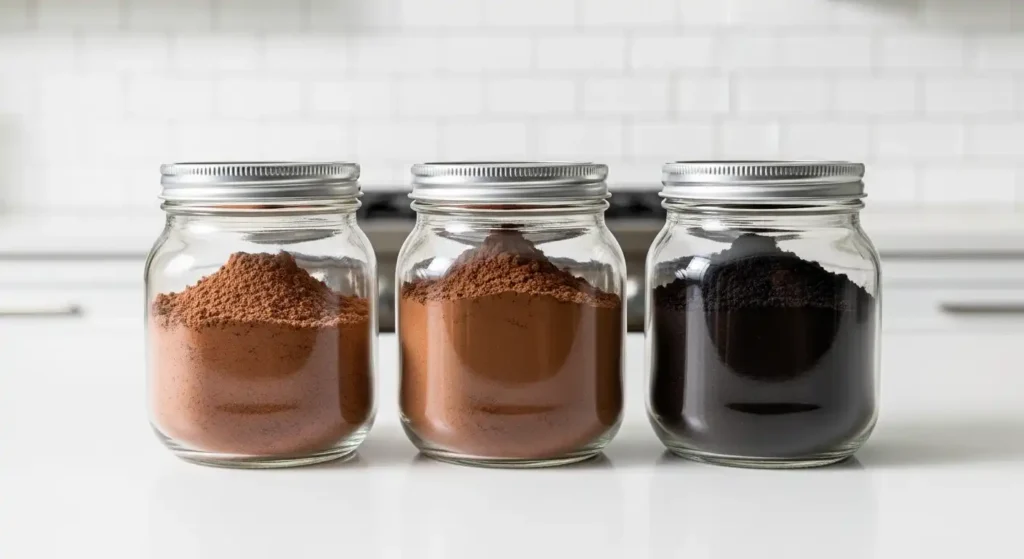
Sometimes, you need something even darker than Dutch-process. Whether you want a “goth” aesthetic or a raw health boost, these specialized powders have unique rules.
Black Baking Cocoa Powder
Black cocoa is the “ultra-Dutch” version, having been heavily alkalized until it is almost charcoal in color. This unique ingredient is the secret behind the iconic Oreo cookie, offering a very specific, smoky flavor and almost zero acidity. However, because this specialized baking cocoa powder is so stripped of fat and acid, using it at 100% concentration can make a cake quite dry. Pro tip: Swap only 50% of your regular cocoa for the black variety to achieve that stunning dark look without sacrificing the moist texture of your bake.
Cacao Powder in Baking
You might see “Cacao” (with an ‘a’) marketed as a raw, “superfood” alternative. It is processed at much lower temperatures to preserve antioxidants. While it’s great for smoothies, using it as a 1:1 swap for baking cocoa powder can be tricky. Raw cacao is more bitter and absorbs more liquid than standard cocoa. If you use it, you might need to add a splash more milk or a touch more sugar to balance the robust profile.
Color vs. Flavor Intensity
It is a common myth that the darker the cocoa, the stronger the chocolate flavor. In reality, the more a cocoa is “Dutched” or alkalized, the more of its original bean flavor is stripped away. Black cocoa looks intense, but its flavor is actually quite mild and “charred.” For the most intense chocolate hit, a high-fat, reddish Dutch-process is usually your best bet.
If you want to apply these cocoa powder tips in real recipes, try something creative like chocolate covered pomegranates for a rich chocolate treat, or balance things out with a savory dish like pepper steak recipe, where mastering flavors and techniques can elevate your overall cooking skills.
Storage and Shelf Life: Keeping Your Cocoa Fresh
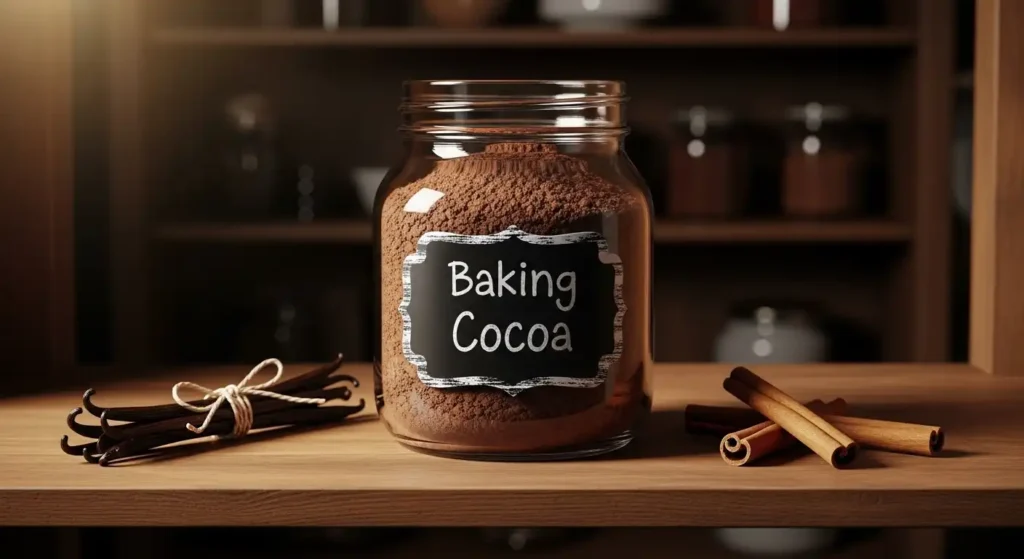
Believe it or not, cocoa is quite delicate. Because it is a dry powder with a high surface area, it can easily soak up weird smells from your spice rack or lose its punch if left out.
The Best Containers for Baking Cocoa
First and foremost, you need to keep your cocoa in a cool, dark, and dry spot. While the pretty tin it comes in might look nice, ensure the lid actually creates an airtight seal to protect your baking cocoa powder from environmental factors. If you live in a humid area, moisture can cause the powder to clump or, even worse, develop mold. Also, try to avoid unlined metal containers for long-term storage, as they can sometimes give the chocolate a metallic “off” flavor over time.
Does Cocoa Powder Expire?
Technically, cocoa powder doesn’t “spoil” like milk does, but it definitely has a peak window. Most experts agree that a sealed container of baking cocoa powder is best used within two years. After that, the cacao solids start to lose their aromatic oils. If your cocoa looks gray or has no smell when you open the tin, it’s probably past its prime. It won’t hurt you, but your brownies will taste like cardboard.
Preventing Clumping
Have you ever bitten into a cookie only to find a dry pocket of bitter powder? That’s a clumping issue. Because cocoa contains residual cocoa butter, it naturally wants to stick together. Therefore, you should always sift your baking cocoa powder through a fine-mesh strainer before adding it to your dry ingredients. This simple step ensures a velvety texture and even distribution throughout your batter.
Frequently Asked Questions
Is baking cocoa the same as cocoa powder?
The short answer is yes, but with a catch. In a culinary context, “baking cocoa” and “unsweetened cocoa powder” are the same thing: 100% cacao solids with the cocoa butter removed. However, you must distinguish them from “hot cocoa mix.” Baking cocoa contains no added sugar or milk, whereas hot cocoa mix is a processed beverage product. Using a beverage mix in a recipe that calls for baking cocoa powder will ruin the structural integrity and sweetness levels of your bake.
What can I substitute for baking cocoa powder?
If you run out of baking cocoa powder, the best substitute is unsweetened baking chocolate. Since baking chocolate contains both cocoa solids and cocoa butter, use this ratio:
The Formula: For every 3 tablespoons of cocoa powder, use 1 ounce (28g) of unsweetened chocolate and reduce the fat (butter or oil) in your recipe by 1 tablespoon.
Emergency Tip: In a pinch, you can use Dutch-process for natural cocoa, but you must add an acid like 1/8 teaspoon of cream of tartar to ensure your baking soda still reacts.
Is baking cocoa healthy?
Yes, pure baking cocoa powder is considered a “superfood” when used without excessive sugar. It is packed with flavonoids and polyphenols, which are powerful antioxidants known to support heart health and reduce inflammation. It is also a surprising source of dietary fiber, magnesium, and iron. Because it is naturally low in calories and has a low glycemic index, it is a staple in keto and vegan diets, provided it is the 100% unsweetened variety.
Does Costco carry baking cocoa?
Yes, Costco typically carries baking cocoa powder under their Kirkland Signature brand or the Rodelle brand. Their offering is usually a high-quality, Dutch-processed cocoa with a higher fat content (often around 20-22%), making it a favorite for bulk bakers who want professional results at a lower price point. Availability can vary by region, so it is always wise to check the baking aisle or the Costco Business Centers for larger quantities.
wish you best and best