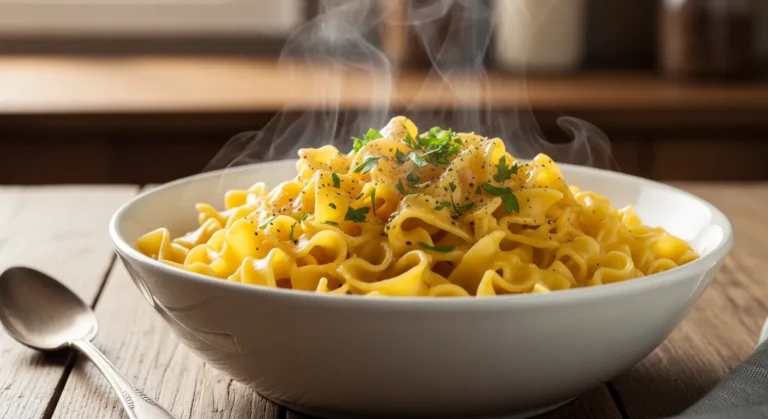
Recently, I kept seeing creamy cafeteria noodles recipe going viral on TikTok, and I couldn’t resist trying them. But after testing a few of the popular recipes, something felt… off. They looked good, but they didn’t taste like the noodles I remembered from school lunches.
So I showed the videos to my aunty, who’s a chef in a school cafeteria. She laughed and told me that most of the TikTok versions were made incorrectly. Then she shared the real method, the way they actually make it in cafeterias. From the way the noodles are cooked to the perfect balance of creamy sauce, every step mattered.
When I made her version at home, it was exactly like I remembered: rich, creamy, comforting, and authentic. This isn’t just a recipe—it’s the one my aunty taught me, the one that truly brings back that classic cafeteria flavor..
The Real Creamy Cafeteria Noodles Recipe: My Aunty’s Authentic Recipe vs. TikTok
Curious, I decided to cook Cafeteria Noodles Recipe both the TikTok version and my aunty’s authentic recipe to see the difference myself. Here’s what I noticed:
1. Creaminess and Texture
- TikTok Version: The noodles were coated in sauce, but it felt a little thin and didn’t stick to the pasta evenly.
- Aunty’s Version: The noodles were perfectly creamy, thick, and silky, clinging to every strand for that classic cafeteria feel.
2. Flavor
- TikTok Version: It tasted decent, but lacked the depth of flavor. Something was missing.
- Aunty’s Version: Rich, buttery, and savory—the kind of comforting taste you remember from childhood lunches.
3. Ingredients
- TikTok Version: Some recipes added unnecessary extras or skipped key steps.
- Aunty’s Version: Simple, classic ingredients—just butter, milk, broth, and the right seasoning—but done in the right way.
4. Ease of Cooking
- TikTok Version: Quick, but results were inconsistent. Sometimes overcooked, sometimes under-seasoned.
- Aunty’s Version: Surprisingly easy, once you follow the proper technique. The result is consistently perfect.
5. Overall Comfort Factor
- TikTok Version: Good as a quick meal, but didn’t bring that nostalgic feeling.
- Aunty’s Version: Every bite felt like a warm hug—comfort food at its finest, exactly like the school cafeteria.
After trying both, it was clear—the real magic is in my aunty’s recipe. The TikTok trend may look pretty, but it doesn’t compare to the authentic creamy cafeteria noodles I grew up loving
Why I Love This Creamy Cafeteria Noodles Recipe
After trying a few different versions and learning the real method from my aunty, I finally understood what makes this recipe so special.
First, it’s all about that rich, creamy texture. When it’s done right, the noodles are perfectly coated—not too dry and not too watery, just smooth and comforting in every bite.
I also love how simple the ingredients are. You don’t need anything fancy, just basic pantry staples that come together in the most delicious way.
Another reason is how quick and easy it is to make. This is the kind of recipe you can prepare without stress, even on busy days.
Of course, the biggest reason is the comfort it brings. It reminds me of simple times, warm meals, and that feeling of home.
And finally, it’s a family favorite. Every time I make it, everyone enjoys it, and there are never any leftovers.
Table of Contents
The Nostalgia and Viral Success of the Cafeteria Noodles Recipe

Why This Old-School Lunch is Trending on TikTok
Social media has a way of resurrecting forgotten gems, and the “Cafeteria Style” noodle trend is no exception. Creators have rediscovered the efficiency and comfort of the one-pot method used by school cooks for decades, often referring back to the classic Cafeteria Noodles Recipe. The appeal lies in its simplicity: a few pantry staples transformed into a dish that tastes like a hug.
Defining the Flavor Profile: Salty, Buttery, and Ultra-Creamy
Unlike Italian pasta dishes that rely on olive oil or acidic tomatoes, this Cafeteria Noodles Recipe is all about the “yellow” flavor profile. It’s defined by a deep savory base from chicken bouillon, a silky mouthfeel from high-fat butter, and a velvety coating that sticks to the noodles rather than pooling at the bottom of the bowl.
Why This Cafeteria Noodles Recipe is the Ultimate Budget-Friendly Side Dish
In an era of rising grocery costs, this Cafeteria Noodles Recipe shines. By using dry egg noodles and canned or jarred bases, you can feed a family of six for just a few dollars. It’s the definition of “pantry cooking” at its finest.
Essential Ingredients and Quantities
To get that authentic, thick consistency, the ratio of liquid to pasta is critical. Below are the precise measurements for a family-sized batch.
Ingredients Overview Table
| Ingredient | Quantity | Purpose |
| Wide Egg Noodles | 16 oz (1 lb package) | The hearty, absorbent base |
| Chicken Broth or Water | 6 – 8 Cups | Cooking liquid for the noodles |
| Chicken Bouillon Paste | 2 – 3 Tablespoons | Intense savory flavor (Better Than Bouillon) |
| Unsalted Butter | 1/2 Cup (1 stick) | Adds richness and a silky sheen |
| Cream of Chicken Soup | 1 Can (10.5 oz) | The secret thickening agent |
| Black Pepper | 1 Teaspoon | Cuts through the richness |
| Salt | To taste | Enhances the chicken flavor |
| Optional: Fresh Parsley | For garnish | Adds a pop of color and freshness |
Choosing the Right Pasta: Why Wide Egg Noodles are Non-Negotiable
To achieve the authentic texture, you must use wide or extra-wide egg noodles. Unlike semolina pasta, egg noodles have a higher yolk content, which makes them softer and better at absorbing the broth without losing their shape.
The Secret Base: The Power of Better Than Bouillon
While boxed broth works, the secret to the “cafeteria” taste is the concentrated flavor of bouillon. Using a paste allows you to control the saltiness and depth of the “chicken” flavor, ensuring the noodles don’t taste watered down.
Step-by-Step Instructions to Make This Cafeteria Noodles Recipe
Preparing the Flavorful Liquid Base: Boiling the Broth and Bouillon
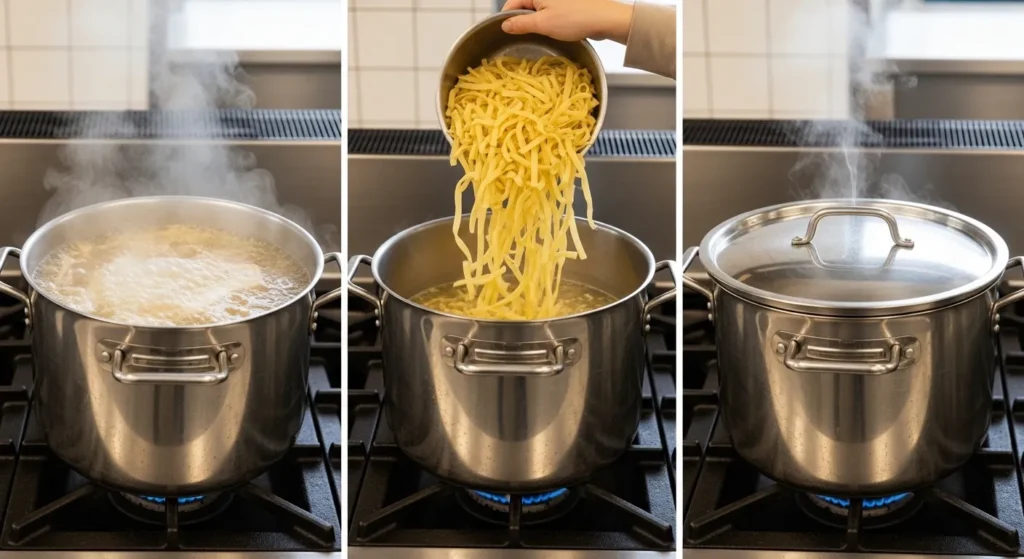
Start by bringing 6–8 cups of water (or broth) to a rolling boil in a large heavy-bottomed pot. Stir in your bouillon until fully dissolved. The liquid should be slightly saltier than you think—remember, the noodles will absorb most of it.
The “Steeping” Technique: How to Cook Noodles Without Draining
Unlike traditional pasta, do not drain the water. Add your dry noodles to the boiling broth, cook for about 7–8 minutes (or 2 minutes less than the package directions), then turn off the heat. The starch released into the water is what creates the “gravy.”
Incorporating the Creamy Elements for Maximum Thickness
While the noodles are still hot and slightly submerged in the remaining liquid, stir in the full stick of butter and the condensed soup. Whisk gently until the sauce is uniform and pale gold.
The Resting Period: Why a 15-Minute Covered Wait is Vital
This is the most important step. Cover the pot and let it sit. During these 15 minutes, the noodles will “drink” the remaining liquid, and the sauce will naturally thicken into a heavy, velvety glaze.
Pro Tips for Achieving the Perfect Al Dente Texture
Preventing Mushy Noodles: Timing Your Boil Perfectly
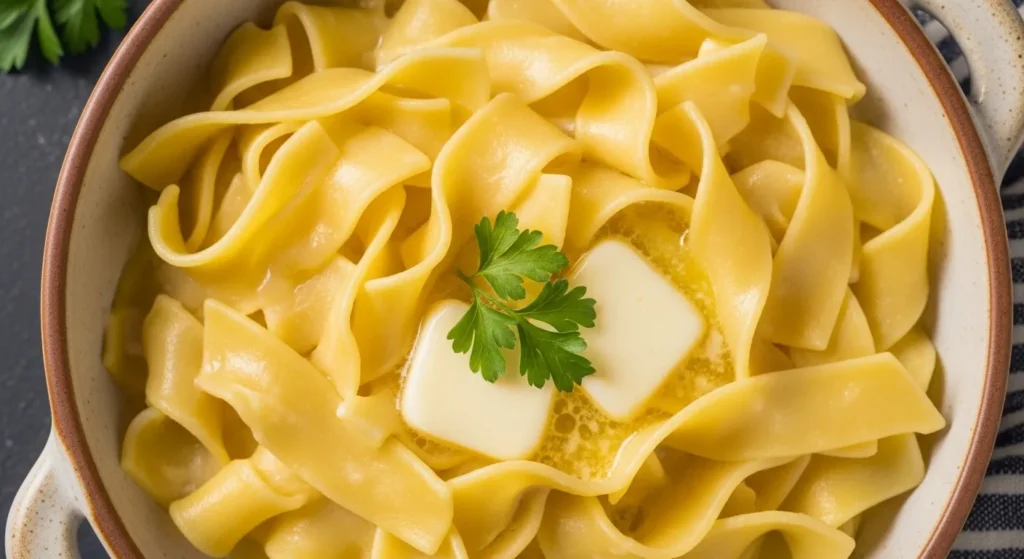
Because the noodles continue to cook during the resting phase, pull them off the heat when they still have a slight “bite” in the center.
To Stir or Not to Stir? Managing Starch for a Smooth Sauce
Stirring too frequently can break the delicate egg noodles. Stir just enough to prevent sticking at the bottom of the pot.
Adjusting Consistency: What to Do if Your Noodles Absorb Too Much Liquid
If the pot looks too dry after resting, simply stir in a 1/4 cup of warm milk or extra broth until the desired creaminess returns.
Recipe Variations and Creative Mix-ins
While the classic Cafeteria Noodles Recipe is perfection on its own, its versatile base makes it easy to customize. Here are a few ways to elevate this nostalgic dish:
Turning a Side Dish into a Main: Adding Protein
To transform these noodles into a hearty, stand-alone meal, stir in two cups of shredded rotisserie chicken or leftover roast turkey during the final mixing phase. The savory broth acts as a built-in gravy, keeping the white meat moist and flavorful.
Vegetable Additions: Color and Crunch
For a nutritional boost and a pop of brightness, incorporate frozen peas or small broccoli florets. Add these during the last two minutes of boiling so they become tender without losing their vibrant green hue.
Gourmet Tweaks: Elevating the Flavor Profile
If you want to take this “old-school” dish into modern territory, try these simple additions:
Fresh Herbs: Top the finished bowl with chopped fresh parsley or chives to cut through the buttery richness with a hit of freshness.
Aromatic Spices: Stir in a teaspoon of garlic powder or onion powder for added depth.
Cheesy Finish: Fold in a half-cup of freshly grated Parmesan cheese or sharp white cheddar for an even creamier texture.
Serving Suggestions and Pairings
What to Serve with Creamy Buttered Noodles
These noodles are the perfect bed for Salisbury steak with brown gravy, meatloaf, or simple roasted chicken breasts.
Holiday Table Integration: Why These Noodles Belong at Thanksgiving
Many families in the Midwest serve these noodles alongside mashed potatoes for the ultimate holiday feast.
Storage, Reheating, and Meal Prep Advice
How to Store Leftover Cafeteria Style Noodles
Keep them in an airtight container for up to 4 days. They will thicken significantly in the fridge as the starch sets.
The Best Way to Reheat: Restoring Creaminess
Never microwave them dry. Add a splash of milk or water before heating to loosen the sauce back to its original glory.
If you enjoy simple comfort meals like this, you might also like trying a pink salt drink for weight management or a refreshing basil seed drink for digestion support. Both can be easy additions to your routine alongside satisfying dishes like cafeteria noodles.
Frequently Asked Questions
What’s the secret ingredient in cafeteria noodles?
The secret to this Cafeteria Noodles Recipe is the use of chicken bouillon paste combined with condensed cream of chicken soup. This specific Cafeteria Noodles Recipe combination provides a deep savory base and a thick, velvety coating that regular broth simply cannot achieve. To finish your Cafeteria Noodles Recipe with perfection, add a generous amount of real salted butter to give the noodles their iconic golden sheen and rich mouthfeel.
What is another name for cafeteria noodles?
Cafeteria noodles are most commonly referred to as Amish Wedding Noodles or simply Old-Fashioned Buttered Noodles. In the Midwest, they are often called Chicken Noodles (even when served without meat) because they are steeped in heavy chicken fat and broth. Recently, they have gained fame on social media under the name Viral TikTok Noodles.
What is the trick to making noodles good?
The ultimate trick to this Cafeteria Noodles Recipe is the “no-drain” steeping method, where you cook the pasta in exactly enough liquid to be absorbed, creating a natural starch gravy. Instead of plain water, always use a highly seasoned cooking liquid so the flavor of your Cafeteria Noodles Recipe penetrates the core of the pasta. Finally, allowing this Cafeteria Noodles Recipe to rest covered for 15 minutes ensures the sauce thickens and clings perfectly to every strand.
Can I just boil noodles in chicken broth?
Yes, boiling noodles in chicken broth is a pro-level move that infuses the pasta with savory flavor from the inside out. Unlike water, the broth allows the noodles to absorb seasoning as they expand, resulting in a much richer dish. Just be sure to monitor your salt levels, as the broth will concentrate in flavor as it reduces during the boiling process.
What is the golden rule for cooking pasta?
The golden rule for this Cafeteria Noodles Recipe is to always reserve your seasoned pasta water and finish the cooking process directly in the sauce. This technique allows the starches to emulsify with fats, creating a cohesive, restaurant-quality Cafeteria Noodles Recipe sauce that won’t separate. For a traditional result, always aim for al dente, ensuring the pasta in your Cafeteria Noodles Recipe still has a firm “tooth” or bite.
Can I put uncooked pasta into soup?
You can absolutely put uncooked pasta directly into soup, but you must increase your broth volume as the pasta will absorb a significant amount of liquid. To prevent the soup from becoming too starchy or the noodles from getting mushy, add the pasta during the last 8–10 minutes of simmering. This method is ideal for one-pot meals because the pasta releases starch that naturally thickens the soup base.